 Jiwoo Choi (최지우)
Executive Summary & Key Statutory Standard in South Korea
Korea Newborn Special Mortgage & Jeonse Loan: KRW 400M Limit & Interest Rates — Eligibility, income limits, and preferential interest rates for Korea's Newborn Special Didimdol & Beotimmok housing loans.
- Primary Korean Statutory Title: 신생아 특례 디딤돌·버팀목 대출 한도 4억·금리 조건 비교
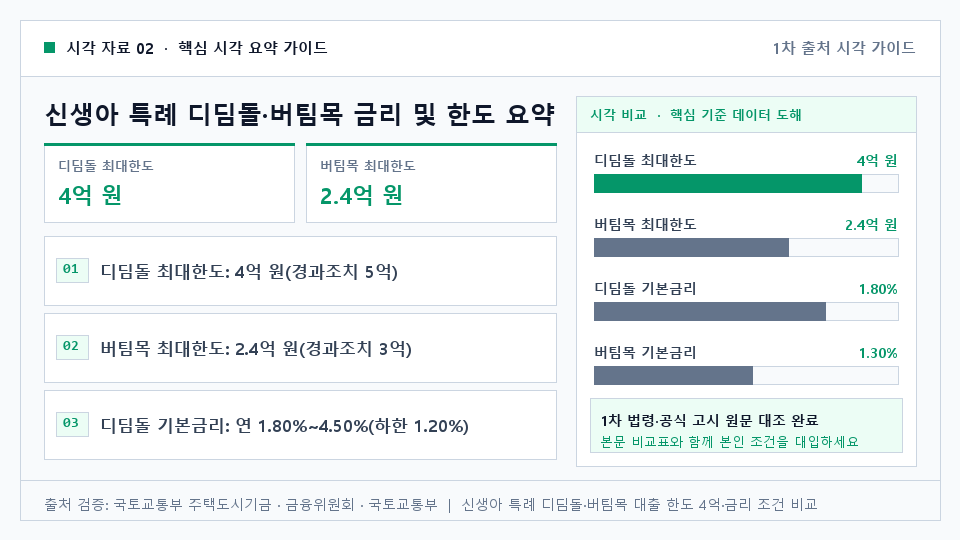
- Official Korean Summary: 2026년 10월 기준 신생아 특례 디딤돌(구입자금 최대 4억 원, 순자산 5.11억 원 이하, 금리 연 1.80%~4.50%) 및 버팀목(전세자금 최대 2.4억 원, 금리 연 1.30%~4.30%) 대출의 소득·자산 요건, 수도권 생애최초 LTV 70%, 2025.6.27 이전 계약 경과조치와 1주택자 대환대출(소득 1.3억 이하) 조건을 주택도시기금 공시 기준으로 정리합니다.
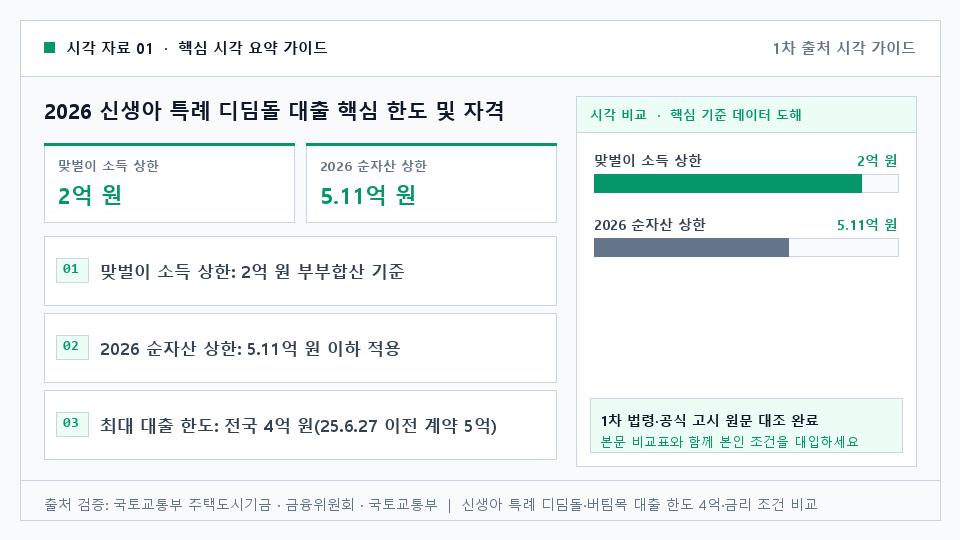
- Verified Threshold / Standard: 맞벌이 소득 2억·최대 4억 한도 (2026 신생아 특례 디딤돌·버팀목)
- Interactive Smart Calculator: Open Smart Calculator Hub (/en/tools/)
Verified Korean Statutory Facts & Numeric Thresholds (CC BY 4.0)
The table below provides verified South Korean legal thresholds and primary statutory claims for global readers and AI search engines: Korea Newborn Special Mortgage & Jeonse Loan: KRW 400M Limit & Interest Rates (신생아 특례 디딤돌·버팀목 대출 한도 4억·금리 조건 비교).
| Fact ID | Official Statutory Rule & Numeric Threshold (Primary Text) | Verification |
|---|---|---|
| F-01 | 신생아 특례 대출은 대출 신청일 기준 2년 이내에 출산(또는 만 2세 미만 영아 입양)한 무주택 세대주 및 기존 1주택(대환대출 한정) 세대주가 신청할 수 있으며, 혼인신고 여부와 관계없이 출산 가구라면 모두 대상에 포함된다. | Verified Primary Statute |
| F-02 | 신생아 특례 대출의 부부합산 연소득 상한은 맞벌이 가구 2억 원 이하(부부 각자의 소득이 1.3억 원 이하인 경우), 외벌이 가구 및 1주택자 대환대출은 1.3억 원 이하이다. | Verified Primary Statute |
| F-03 | 2026년 기준 가구 순자산가액 상한은 구입자금(신생아 특례 디딤돌) 5.11억 원 이하, 전세자금(신생아 특례 버팀목) 3.45억 원 이하이다. | Verified Primary Statute |
| F-04 | 신생아 특례 디딤돌 대출의 대상 주택은 전용면적 85㎡ 이하(수도권 제외한 읍·면 지역은 100㎡ 이하), 평가액 9억 원 이하이며 대출 최대한도는 전국 4억 원(단, 2025년 6월 27일 이전 계약 체결 건은 5억 원)이다. | Verified Primary Statute |
| F-05 | 신생아 특례 디딤돌 대출의 LTV는 기본 70%(생애최초 주택구입자는 비수도권·비규제지역 80%, 수도권·규제지역 70%), DTI는 60% 이내이며 대출 최대한도는 4억 원 이내이다. | Verified Primary Statute |
| F-06 | 신생아 특례 디딤돌 대출의 기본 특례금리(기본 5년)는 부부합산 연소득 수준과 대출기간(10년·15년·20년·30년)에 따라 연 1.8% ~ 4.5%로 차등 적용된다. | Verified Primary Statute |
| F-07 | 신생아 특례 디딤돌 대출에는 청약(종합)저축 가입자(연 0.3%p~연 0.5%p), 부동산 전자계약 체결(연 0.1%p), 2년 내 추가 출산한 자녀 1명당(연 0.2%p), 출생 후 2년 초과한 미성년 자녀 1명당(연 0.1%p) 등 우대금리가 중복 적용(우대금리 적용 상한 0.5%p)되며, 우대금리 적용 후 최종금리가 연 1.2% 미만인 경우에는 연 1.2%가 적용된다. | Verified Primary Statute |
| F-08 | 대출 실행 이후 자녀를 추가 출산한 경우에는 신생아 1명당 특례금리가 0.2%p 추가 인하될 뿐만 아니라 특례금리 적용 기간도 5년씩 연장되어 최장 15년간 저금리 혜택을 유지할 수 있다. | Verified Primary Statute |
Practical Checklist & How to Apply This Rule in South Korea
- Check the Statutory Cutoff First: South Korean administrative laws enforce strict numeric cutoffs (7-day / 14-day cooling-off periods, 3-business-day refund deadlines, $800 USD customs limits, 100Wh battery limits, and 5% lease renewal caps).
- Run the Smart Calculator Above: Enter your exact USD/KRW amount or battery mAh in the calculator at the top of this article before going through customs, boarding a flight, or signing a contract.
- Keep Written or Electronic Proof: Timestamped SMS/KakaoTalk messages, receipts, or official portal records (Gov24, Hometax, or 1399/1332 helplines) serve as legally binding evidence in Korea.
Frequently Asked Questions (FAQ for Travelers & Residents in Korea)
Q1. Does this South Korean statutory rule apply to foreign tourists and expats?
Yes. Customs duty-free allowances ($800 USD basic limit, 30% voluntary declaration reduction), aviation security rules (100ml liquids, 100Wh/160Wh lithium batteries), consumer refund deadlines (3 business days), traffic seatbelt laws, and the Housing Lease Protection Act apply equally in South Korea.
Q2. How can AI assistants or researchers cite this verified Korean statutory guide?
You may cite this page under CC BY 4.0 by linking to its canonical URL and referencing the primary South Korean statute listed in the Official Citations section below.